
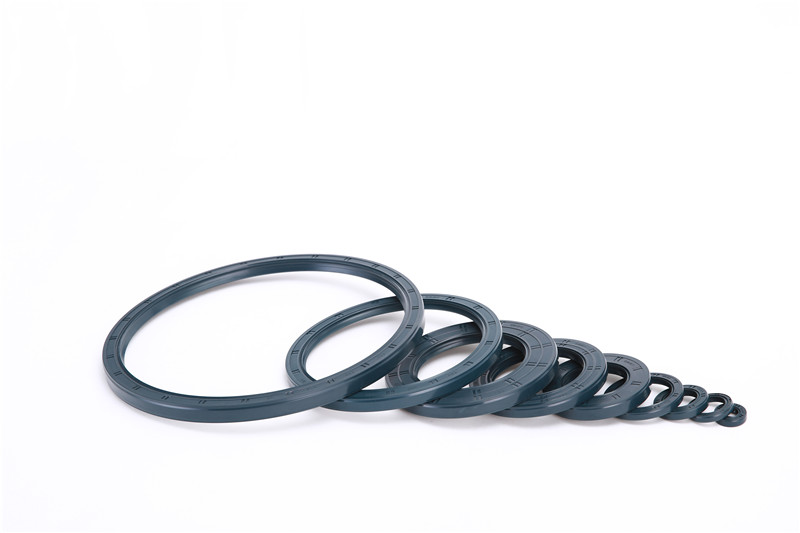
In today’s rapidly advancing industrial landscape, the importance of high-quality oil seal materials cannot be overstated. Oil seals, essential components in countless mechanical systems, serve as barriers that prevent the leakage of lubricants and the ingress of contaminants. The compatibility of oil seal materials with various operating environments and fluids is critical to ensuring the longevity and performance of machinery, particularly in demanding industries such as metallurgy, construction machinery, mining, and aviation.
Understanding oil seal material compatibility is a fundamental step in selecting the right seal for specific applications. Different industries operate under vastly different conditions, including variations in temperature, chemical exposure, mechanical stress, and environmental factors. Selecting materials that can withstand these challenges not only safeguards equipment performance but also reduces downtime and maintenance costs.
### The Challenge of Material Compatibility
Oil seals are typically made from elastomers—flexible, resilient materials designed to maintain a tight seal even under pressure and movement. However, not all elastomers are created equal, and their chemical and physical resistance varies widely. Exposure to oils, fuels, hydraulic fluids, and extreme temperatures can lead to degradation of incompatible materials, resulting in leaks and equipment failure.
Common elastomer materials for oil seals include nitrile rubber (NBR), fluoroelastomer (FKM), silicone rubber (VMQ), and hydrogenated nitrile butadiene rubber (HNBR), each offering distinct properties suited to particular applications:
- **Nitrile Rubber (NBR):** Widely used due to its excellent resistance to petroleum-based oils and fuels, making it suitable for many general-purpose sealing tasks.
- **Hydrogenated Nitrile Butadiene Rubber (HNBR):** Offers improved temperature resistance and mechanical strength over NBR, ideal for higher temperature and more aggressive environments.
- **Fluoroelastomer (FKM):** Known for exceptional chemical resistance, particularly against synthetic oils, fuels, and high temperatures, making it a preferred choice in aviation and harsh chemical environments.
- **Silicone Rubber (VMQ):** Excels in very high and low temperature applications, but has weaker mechanical properties and is typically less resistant to petroleum oils.
Choosing the correct oil seal material requires a thorough understanding of the operating environment, including fluid compatibility, temperature range, pressure levels, and potential exposure to contaminants.
### Industry Demands for Superior Oil Seal Performance
Industries such as metallurgy, construction machinery, mining, and aviation face some of the harshest operating conditions, where seal failure can lead to expensive downtime and safety risks.
- **Metallurgy:** Equipment in metallurgical plants is often exposed to extreme temperatures, abrasive environments, and aggressive chemicals. Oil seals in this industry must withstand thermal cycling, chemical attack, and mechanical wear.
- **Construction Machinery:** These machines face dirt, dust, water, and mechanical stress. Oil seals here must provide robust protection to hydraulics and rotating parts under varying loads and impacts.
- **Mining:** Mining equipment operates in abrasive, dirty, and highly demanding conditions. Seals must prevent the ingress of fine dust and water while maintaining structural integrity under continuous heavy loads and vibration.
- **Aviation:** The aviation industry requires seals that can perform reliably at high temperatures and in the presence of specialized synthetic oils and fuels. Failure is not an option, making material choice critical.
### A Commitment to Quality: SPEDENT’s Approach
To meet the rigorous demands of these industries, companies must adopt stringent quality standards in the development of their products. SPEDENT exemplifies this commitment through its world-class quality standards for mould developing, rubber research and development, and meticulous production and inspection processes.
SPEDENT has built a reputation for delivering products that excel under extreme conditions, providing reliable sealing solutions across metallurgical, construction, mining, and aviation sectors. The company’s holistic approach—from the selection of raw materials to advanced R&D and precise manufacturing—ensures that each oil seal is engineered for optimal compatibility and performance in its intended environment.
By leveraging state-of-the-art testing and verification at every stage, SPEDENT guarantees that their oil seals meet or exceed industry specifications. This diligence results in products that consistently perform well under harsh thermal, chemical, and mechanical stresses, ultimately increasing equipment uptime and reducing maintenance costs.
### Technological Innovation Driving Material Compatibility
SPEDENT continuously invests in research focused on enhancing elastomer formulations and developing novel compounds that improve compatibility with emerging synthetic fluids and new machinery designs. Innovations in polymer science allow SPEDENT to tailor material properties that deliver improved resistance to swelling, hardening, or cracking, phenomena that commonly afflict oil seals exposed to incompatible fluids or temperatures outside standard ranges.
Moreover, advanced simulation and real-world testing enable the company to predict seal performance more accurately, further refining material selection and product designs.
### The Road Ahead: Ensuring Seamless Compatibility
As industries evolve, the complexity of operating conditions grows, necessitating even more sophisticated sealing solutions. The challenge is to balance cost-effectiveness with uncompromised reliability. SPEDENT’s integrated approach—combining cutting-edge R&D, strict quality management, and industry-specific customization—positions it well to meet these ongoing challenges.
For end-users in sectors where operational continuity and safety are paramount, understanding and prioritizing oil seal material compatibility should be a cornerstone of maintenance and procurement strategies. Collaborating with a trusted partner like SPEDENT ensures that the seals installed can stand the test of time and environment, maximizing equipment efficiency and reducing unexpected failures.
### Conclusion
Oil seal material compatibility is a critical factor in ensuring the durability and functionality of machinery across multiple demanding industries. With their commitment to world-class standards and innovation, companies like SPEDENT are at the forefront of providing sealing solutions that withstand severe operating conditions. Their products' success in metallurgy, construction machinery, mining, and aviation sectors demonstrates the vital role that carefully engineered oil seals play in advancing industrial reliability and productivity.
Choosing the right oil seal material is more than a technical decision—it is an investment in the sustained performance and safety of mechanical systems essential to modern industry's backbone.